
Introduction — OEM Heated Gloves Require More Than Just a Good Design
Making OEM heated gloves is more involved than tailoring regular clothes, because it integrates textiles with electronics where electronics, textiles, batteries, waterproofing, and certifications must fit flawlessly to prevent failures such as uneven heat or safety concerns. Engineers in heated apparel, including those with long tenures at OEM companies in Dongguan, have seen projects succeed and fail on exactly this basis. For example, one U.S. brand lost months when its factory ignored battery certification, blocking shipment. This guide draws on real cases to help brands navigate the complex glove manufacturing process and achieve transparent, efficient results.
What Brands MUST Know Before Developing OEM Heated Gloves
Across dozens of glove lines, the following are the basics to focus on, OEM development principles of heated jackets can apply, however, gloves introduce the issue of dexterity.
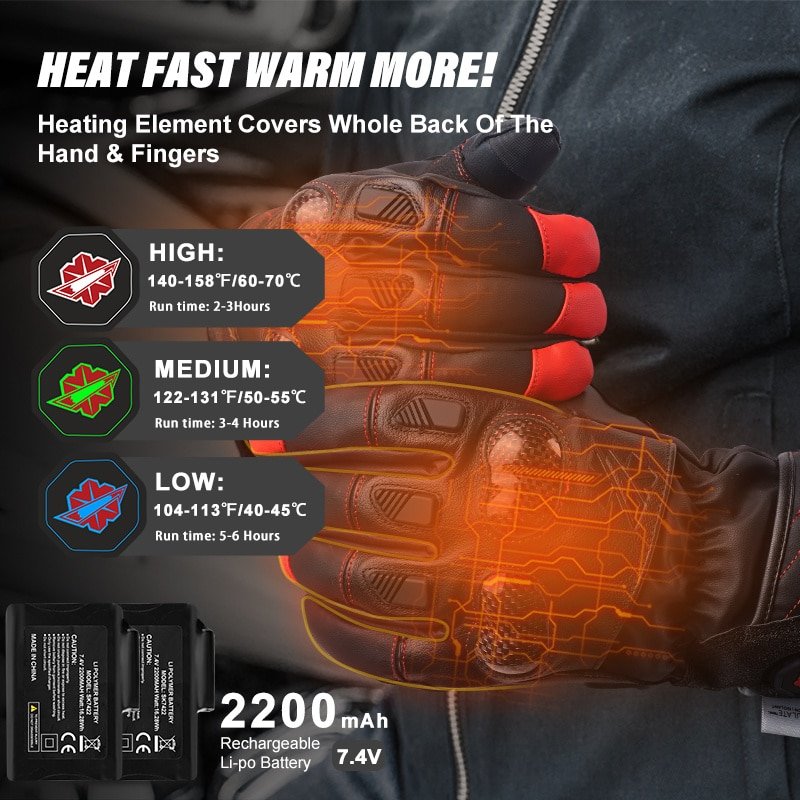
Heating System Determines 70% of Performance
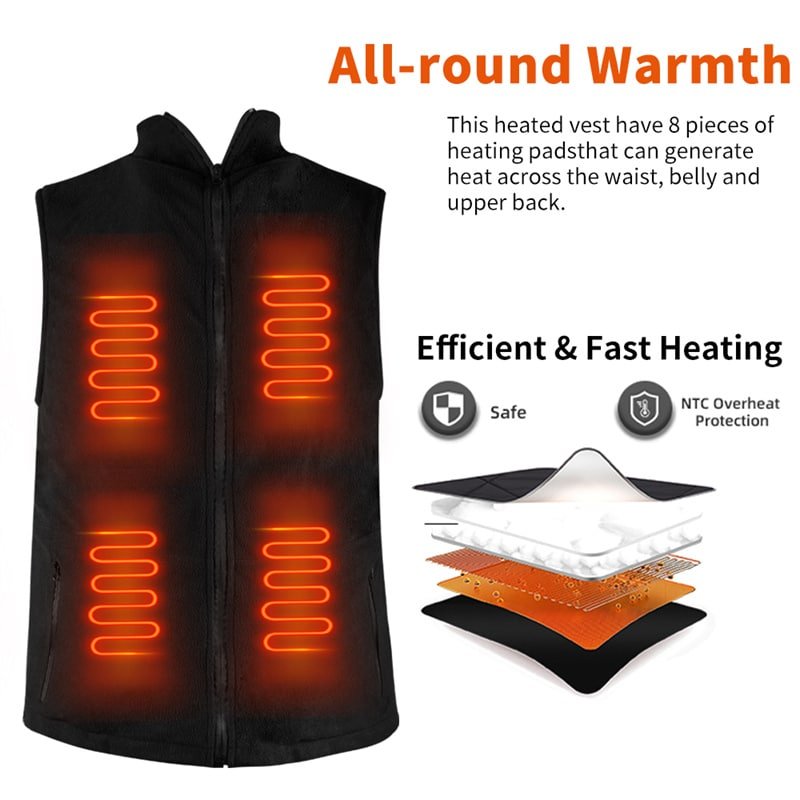
Carbon fiber, graphene film, heating wire — the differences should be evaluated based on the intended use, because wire is cheaper, while film can provide more even heating.
Battery Technology Affects Safety & Runtime
The majority of projects work with 7.4V lithium-ion balance- do not use 5V to work at actual cold.
Waterproofing & Insulation Are Not Optional
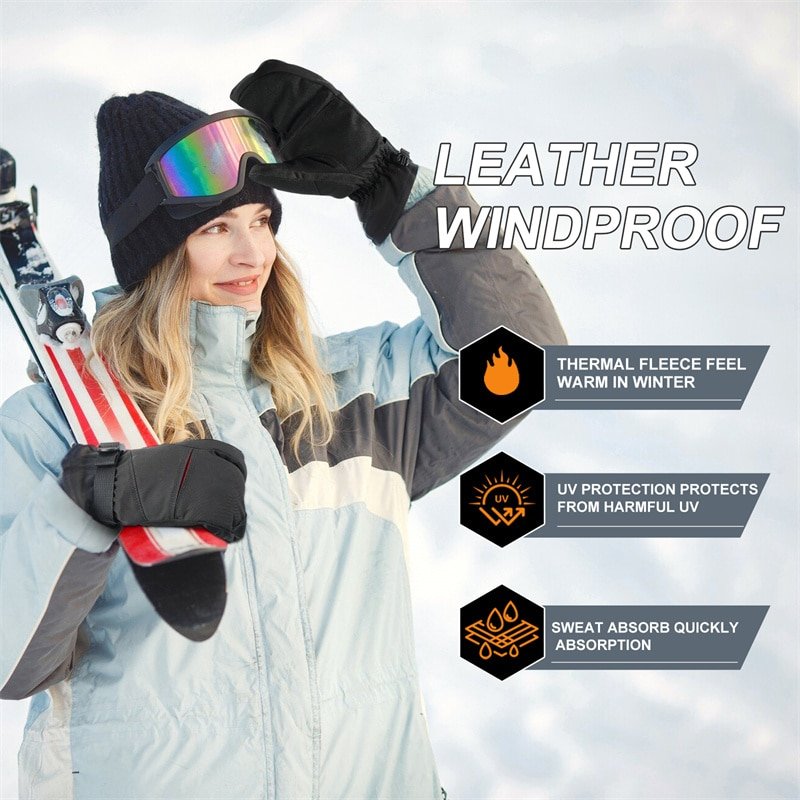
IPX ratings prevent the destruction of moisture especially in skiing, snowboarding and outdoor work.
Certifications Are Mandatory for Global Markets
Four documents cover almost every heated-glove order: CE, FCC, RoHS, and UN 38.3. Buyers check for them before they check the product, because without them customs, retailers and marketplaces will stop the shipment.
Heating System Options for OEM Heated Gloves
The heart is the heating system, and understanding how heating elements work helps brands choose the right option based on glove type, efficiency goals, and product positioning in graphene heated glove OEM trends.
Carbon Fiber Heating Elements (Most Common)
Flexible enough to follow the finger joints, so it survives repeated bending with a low failure rate in flex tests — and it can be routed into separate zones instead of one flat pad.
Graphene Heating Film (Premium Option)
Super-slim, quick heating, evenly warmed-through, reaches temperatures within 30 seconds, consumes 20% less energy to offer superior run times.
Traditional Heating Wire
Inexpensive and not as perfect in higher end markets- prone to hotspots and breaks in finger spots.
Heating Zone Strategy
Palm + back of hand + single fingers – keep the tips of the fingers covered to allow circulation because toes in socks yet hands in gloves get cold too quickly.
Battery Requirements & Power System Design
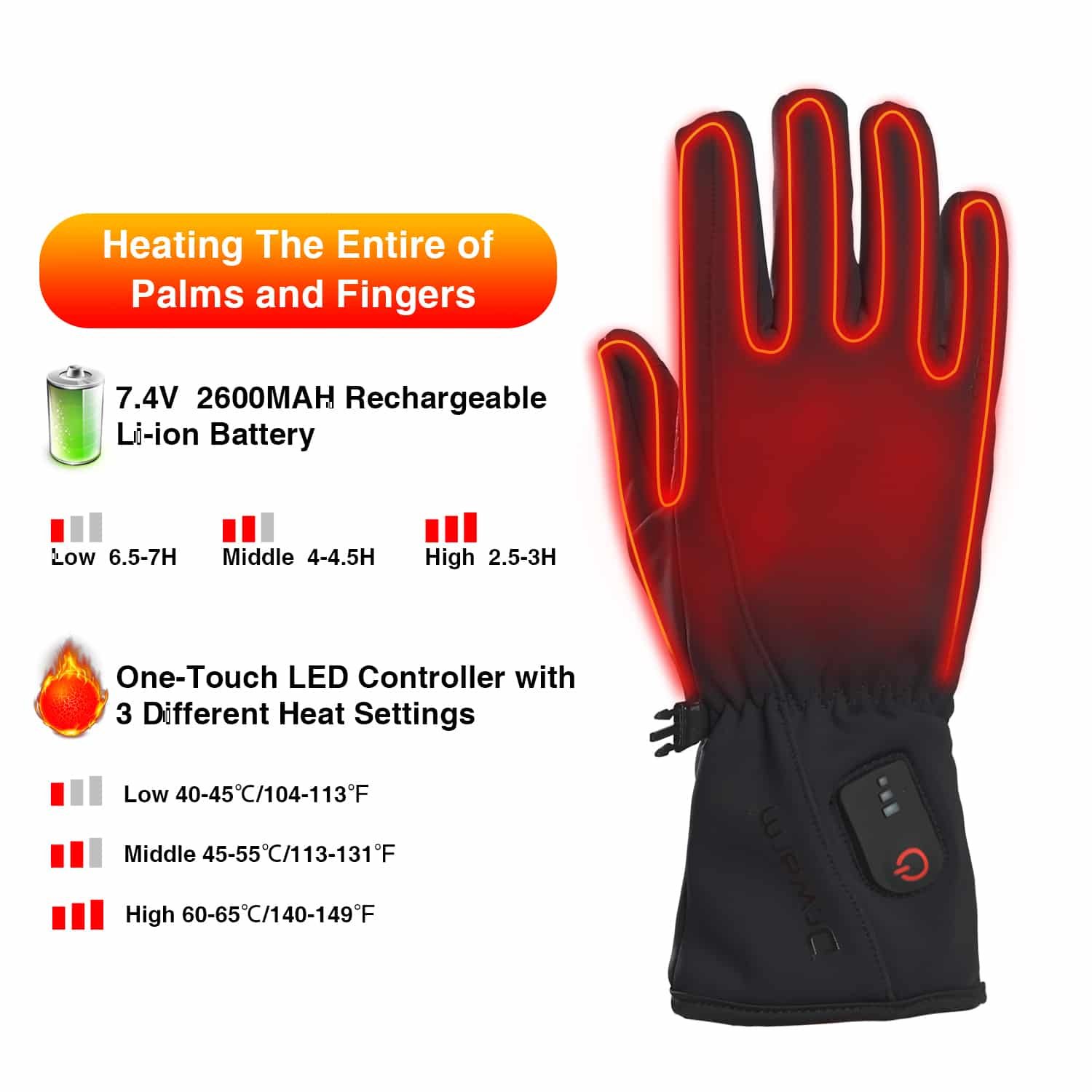
Performance is driven by batteries- batteries to heat gloves should correspond with usage because in cold 5V will not work but 7.4V will.
Voltage Options — 5V / 7.4V / 12V
5V is a little warm and light; 7.4V is industry standard to balance, 12V is extremely cold, and motorcycle gear to very extreme warmth.
Battery Capacity & Runtime
Match battery capacity to the target runtime rather than to the biggest number on the label: typical gloves use 2,000–3,000 mAh per hand and are sized for 4–6 hours on medium in 0°C tests.
Battery Safety Features
A pack needs BMS, overheat protection, short-circuit protection and overcurrent protection. Those four are what keep a glove from failing after a season of moisture and repeated flexing.
Safety Certification (Mandatory)
UN38.3 on transportation- guarantees safe shipping that does not entail explosion.
Temperature Control Systems
The controller is where usability is won or lost: PCB placement and button specification have to keep the control reachable at the cuff and operable with the glove already on.
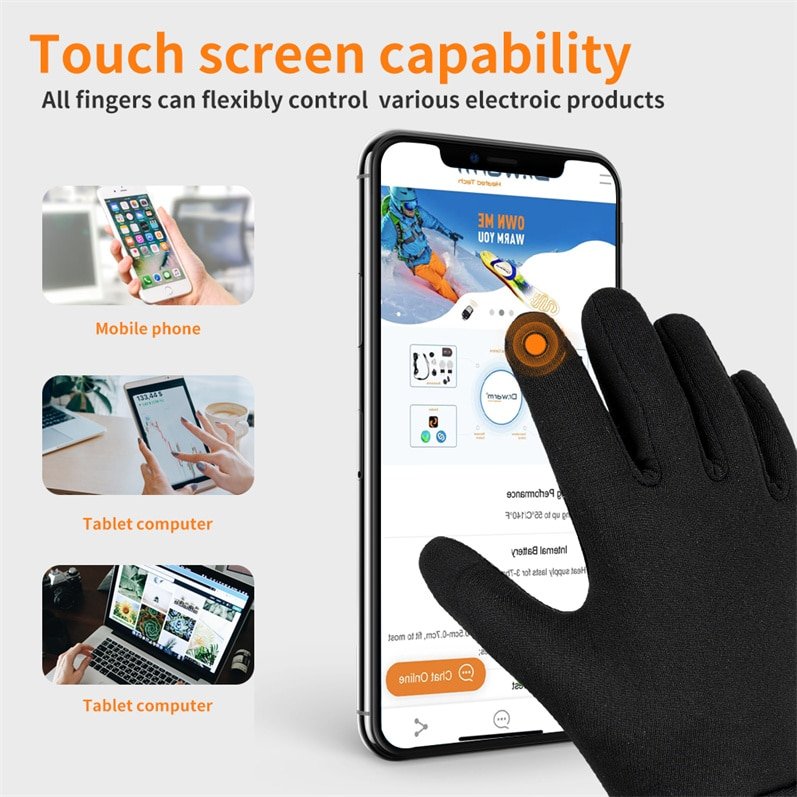
Button Controller (3 Levels)
Most popular- low/medium/ high to operate.
Wireless Remote Control
Skiing and snow sports–plastic.
APP Control (High-End)
Bluetooth connect, various areas – exact in custom heat.
Controller Logic
Pulse-width modulation (PWM) stable temperature-efficiently controls power.
Materials, Waterproofing & Construction
Materials are what guarantee wearability- heats up apparel among utility workers needs to be tough.
Outer Shell Materials
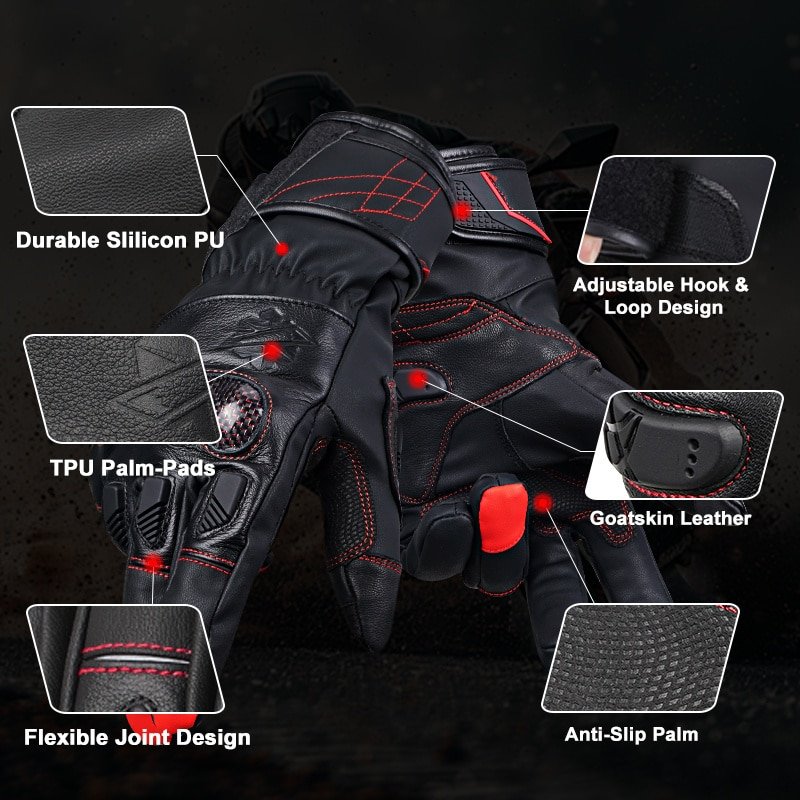
Leather, nylon, softshell-leather in work gloves.
Waterproofing
IPX-rated membranes- IPX4+ exposed to snow.
Insulation Layers
Thinsulate, hollow fiber, fleece- balances between warmth and flex.
Lining Comfort & Ergonomics
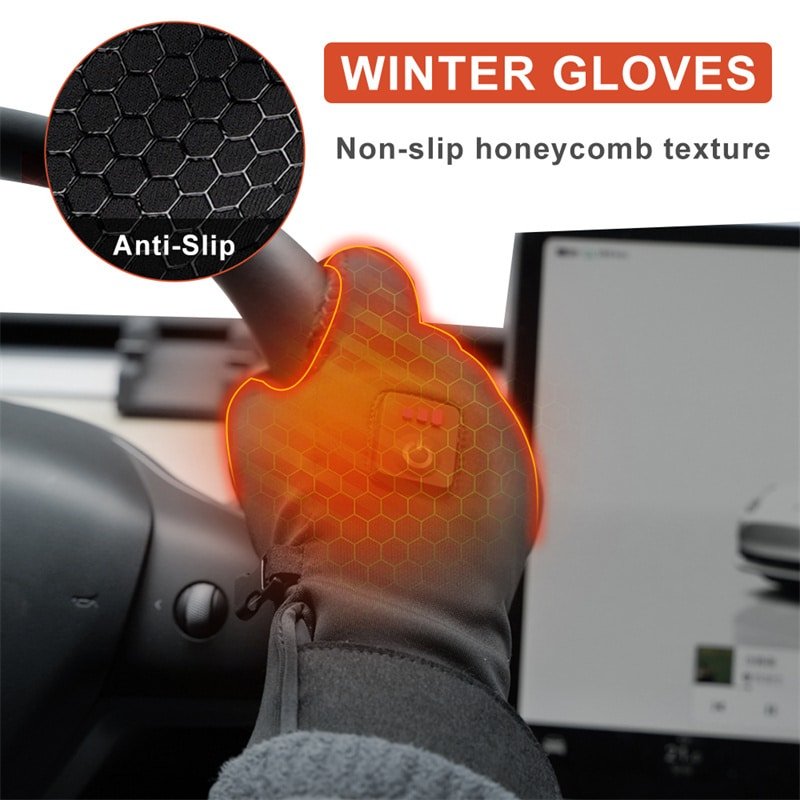
Anti-slip palm, pre-curved fingers- increases usability.
Engineering Requirements & Wiring Layout
The engineers avoid failure- as wiring errors in heated gloves such as bad routes lead to 30 percent of QC denials in factory audits.
Reinforced Finger Bends
Avoid wire breakage in places of high flex.
Hidden Wiring Route
Enhance comfort and safety- sewn channels are non-bulky.
PCB Placement
Sturdy, covered up, non-wet—strapped on the cuff.
Connector Types
DC plug, magnetic plug, custom plug—magnetic for easy charging.
Certifications & Compliance (Non-Negotiable)
DC plug, magnetic plug, custom plug-magnetic so that it can be charged easily.
CE
EMC + electrical safety—mandatory for EU.
FCC
Mandatory in U.S. electronics emissions.
RoHS
Material compliance no hazardous substances.
UN38.3
Battery transport safety.
Optional UL Testing
For large-scale retail trust.
QC Testing Standards for OEM Heated Gloves
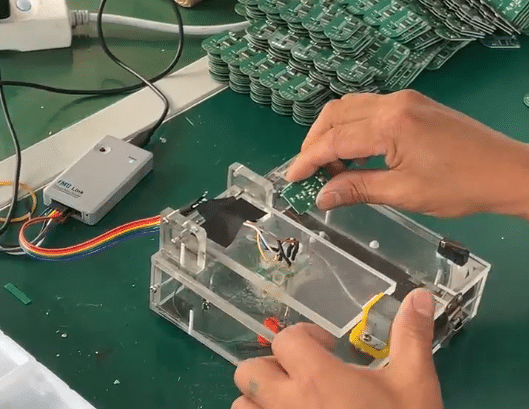
The failures that cost the most are the ones caught late — imbalanced heat, wiring that breaks at the flex points, a pack that fades in the cold. Each has to be detected before the bulk run, not after.
Heating consistency test-evenness: thermal imaging.
Runtime test-– full runs in cold chambers.
Cold chamber test--test performance at -20C.
Waterproof test- IPX immersion.
Wiring bend test (3,000–5,000 bends) – flex life.
Battery test– short-circuit /overcharge.
Final inspection + aging test- 24 hours defect run.
Cost, MOQ & Lead Time Expectations
All three move with the specification, so the honest answer is a range: heated gloves average around 45 days in mass production, and the MOQ and unit cost follow the route the buyer chooses.
Typical MOQ
OEM from 100 pairs, full ODM from 500 pairs, stock models from 1 pair. The route decides the number, not the factory — an OEM project reuses an existing pattern and heating platform, so only branding, materials and packaging carry minimums, while a full ODM project carries new tooling, a new element layout and new firmware.
Lead Time
Sampling: 7–30 days depending on customization. Mass production: 20–25 days for OEM with logo and packaging, 50–60 days for full ODM development, and within 45 days for standard orders — certification scope affects the timeline.
Cost Drivers
The optional features include heating type, insulation, battery size, controller, waterproofing, packaging, and premium graphene will increase the cost by 20-30%.
Common OEM Mistakes & How to Avoid Them
The mistakes below are cheap to avoid and expensive to fix. Every one of them comes from a decision made too early — before the heating layout, the voltage or the certification scope was settled.
Mistake — Choosing 5V for Cold Climate Products
It should always be used with a 7.4V or more performance.
Mistake — No Clear Heating Zone Layout
Should state finger heating so as to be covered.
Mistake — Ignoring Safety Standards
Batteries should be certified to prevent prohibitions.
Mistake — Working With Factories Without Heating Expertise
General cold factories do not = warm up glove factories-vet electronics experience.
Mistake — Rushing Sampling Process
Not taking tests will result in large-scale mass-production failures– need QC.
Final Recommendation — Heated Glove OEM Requires Strong Engineering & Clear Communication
To be successful, characterize the heating system so carbon-based options are durable, select batteries with BMS protection, prioritize waterproofing, and run proper cold-environment testing. Collaborate with established hot clothing manufacturers to gain the engineering expertise needed to build trusted and competitive products.
Frequently Asked Questions
What is the minimum order for OEM heated gloves?
It depends which route you take. An OEM build that adapts an existing glove pattern and heating platform starts from 100 pairs; a full ODM development with new tooling, a new element layout and new firmware starts from 500 pairs. Stock models with your branding applied are available from 1 pair for evaluation.
Can we supply our own batteries and chargers?
Yes, with two conditions. The pack has to match the element resistance and the controller rating, because a pack of a different voltage changes the current the circuit draws. And the pack has to arrive with the transport and safety documentation that goes with it, or it cannot be shipped as part of the finished glove.
How long does an OEM program take from tech pack to shipment?
Sampling runs 7 to 30 days depending on how much of the platform already exists. Once the sample is approved, OEM production is 20 to 25 days and full ODM development plus production is 50 to 60 days. Seasonal windows are the real constraint, so the calendar should be built backwards from the retail date rather than forwards from the order date.
Do you handle private label, packaging and manuals?
Yes — branding on the glove, woven and printed labels, retail cartons, hangtags, manuals and multi-language inserts. Artwork and translation are supplied by the brand, and we return a print-ready proof before the run. Packaging is usually the last item approved and the first one to hold up a shipment, so it belongs in the plan from week one.