Quick answer: Tooling and IP ownership are contract terms, not defaults. Before any mould, pattern or custom heating-zone drawing is made, put four things in writing: who owns customer-specific tooling, who owns the garment pattern and artwork, what pre-existing platform technology stays with the factory, and what happens to samples and drawings if the programme ends. A mutual NDA should be signed before CAD files or artwork are shared. OEM starts at 100 pieces and full ODM at 500 pieces on this site; sampling takes 7-30 days.
This guide is for brand owners, distributors and sourcing teams entering a first heated apparel programme. It is practical guidance on what to agree, not legal advice — have your own counsel review the final wording. For the wider development sequence, see our OEM/ODM development guide and the 9-point manufacturer checklist.
Why Heated Apparel Creates More IP Questions Than Standard Garments
A standard jacket is one product. A heated jacket is two: an insulated garment and a low-voltage electrical system, with a controller, a battery and a heating-element drawing that had to be engineered. Each part has a different owner by default, which is exactly why the boundary has to be written down.
The typical split is straightforward. Your logo, colourway, packaging artwork and brand assets are yours. The factory’s existing platform — the standard 7.4V or 5V electrical architecture, controller logic, proven element construction and manufacturing know-how — stays with the factory. The grey area is everything created specifically for your project: a new pattern, a custom heating-zone layout, a moulded battery housing, a bespoke insole shape or a firmware behaviour you asked for.
| Asset | Typical position | What to write into the agreement |
|---|---|---|
| Logo, artwork, packaging dieline | Buyer-owned | Factory may use only to produce your order; no reuse or display without written permission |
| Customer-specific tooling / moulds | Negotiable | Owner, storage location, maintenance responsibility, and whether it may be used for other buyers |
| Garment pattern and size grading | Negotiable in ODM | Whether exclusive to your brand and for how long |
| Custom heating-zone drawing | Negotiable | Who may reuse the layout, and whether derivatives are permitted |
| Factory platform technology | Factory-owned | Acknowledge pre-existing designs so the clause does not overreach |
| Samples, test data, firmware requirements | Confidential | Covered by NDA; no disclosure or use outside the project |

When to Sign the NDA
Sign before the first technical exchange, not after the sample is approved. In practice that means before you send CAD files, a zone drawing, artwork, your target price band or your target-market compliance list. A mutual NDA is normal: it protects your design, and it protects the factory’s platform details shown in the engineering proposal.
- Technical drawings, CAD files and 3D mould data
- Heating-zone layouts, controller behaviour and firmware requirements
- Samples, prototype photos and test results
- Commercial terms, target price band and launch timing
- The existence of the project itself, if the product is not yet announced
For file preparation itself, see how to prepare CAD files for mould development. An NDA is not a substitute for a clear specification — the more precisely the brief is written, the fewer disputes later.
OEM vs ODM: The Ownership Boundary Moves
| OEM | Full ODM | |
|---|---|---|
| Starting point | Existing factory platform, branded or modified | New garment and heating system developed from a brief |
| MOQ on this site | 100 pieces | 500 pieces |
| Development | Sampling 7-30 days | Full development 50-60 days |
| Who contributes design | Mostly the factory platform; buyer supplies brand assets | Both sides; factory contributes engineering |
| Key IP question | Scope of the branding licence and any buyer-specific modification | Who owns the new pattern, zone drawing and exclusivity |
In OEM, the main thing to pin down is the branding licence: the factory may use your marks only to fulfil your order. In full ODM, add exclusivity — whether the resulting platform can be sold to other brands, in which markets, and for how long. More on the structural difference in OEM vs ODM in heated apparel.

The Clauses Worth Getting Right
- Tooling: owner, storage, maintenance, insurance, and the handover process if you move production.
- Exclusivity: territory, product category, duration, and whether a derivative design counts.
- Confidentiality term: how long it survives after the last order.
- Sub-suppliers: whether cells, elements or fabric can be sourced from third parties and whether they are bound by the same terms.
- End of programme: return or destruction of drawings and samples, and what happens to leftover branded packaging.
Documentation belongs in the same conversation. Conformity documentation for CE, UKCA, UL, FCC, RoHS, Reach, UN38.3, DOE and ISO 9001, plus GB 47372-2026 with CCC on the battery side, is held by Dongguan S-KING Limited; production is carried out by Dongguan Ditewang Intelligent Technology Co., Ltd. Certificates name a legal entity, so make sure your paperwork and your contract name the same parties — see what each certification covers and our certifications page.
Also align the commercial documents. Payment terms and order process, warranty and after-sales support, Incoterms and import duties should reference the same entity names, product specification and ownership clauses. Mismatched paperwork is a common cause of delays at customs and during buyer audits.
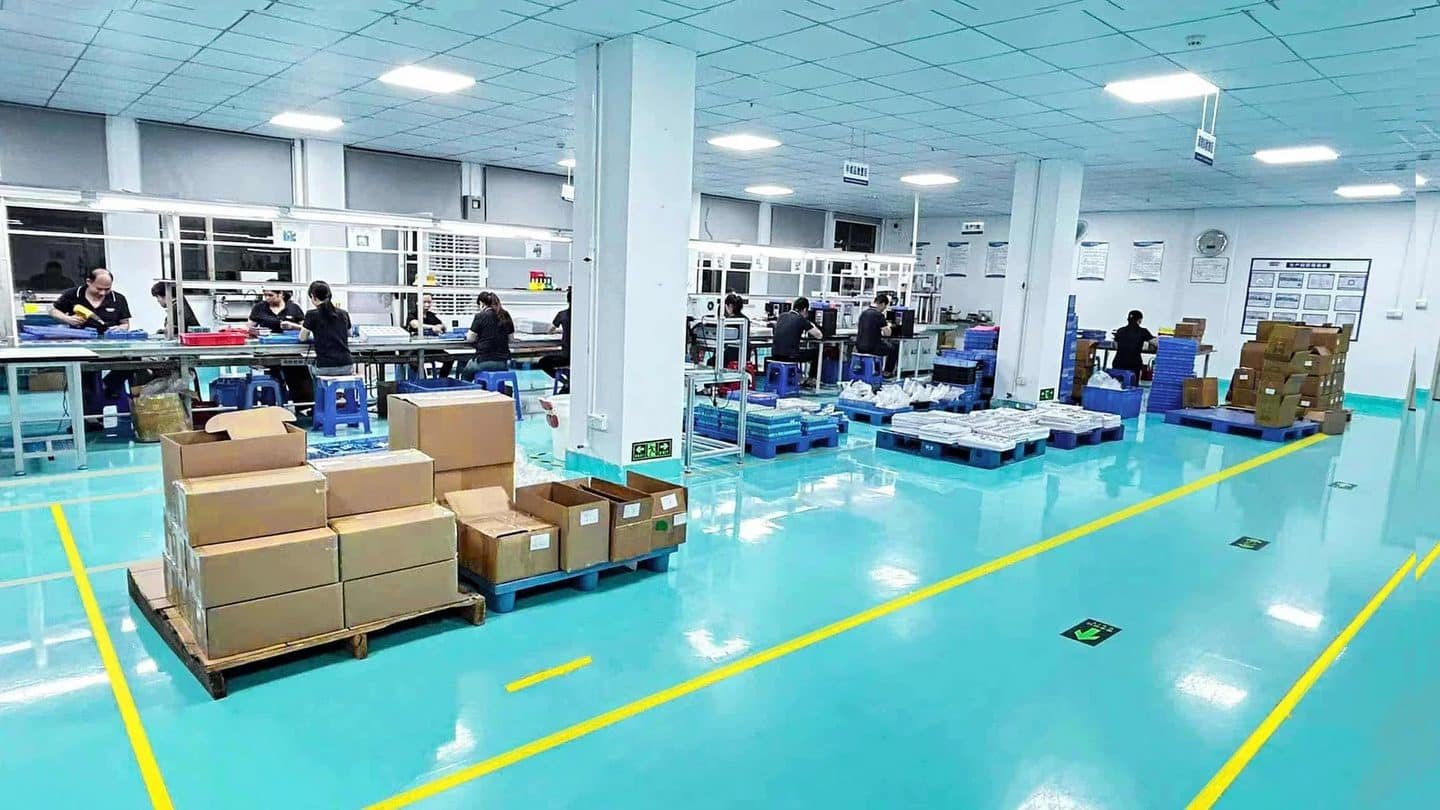
Production covers 3 lines in a 6,000 m² main plant plus a separate 2,074 m² electronics assembly workshop, with a team of 56 and 8 in-house R&D engineers. Dr. Warm has supplied heated products Since 2013. Finished products carry a 12-month warranty. See our OEM and ODM services and the factory.
Frequently Asked Questions
Who owns the mould in an OEM heated apparel project?
Ownership is a contract term, not something decided by who paid the invoice by default. State in the supply agreement who owns customer-specific tooling, where it is stored, who maintains it, and whether it can be used for other buyers. Get the clause written before tooling starts, not after sample approval.
Should I ask a heated apparel factory to sign an NDA?
Yes, before sharing CAD files, artwork, firmware requirements or your target-market price structure. A mutual NDA is normal in OEM and ODM projects. It should cover technical drawings, samples, test data and the existence of the project itself.
Does ODM mean the factory owns the design?
Not automatically. In full ODM development the factory usually contributes the engineering, but exclusivity, design ownership and whether the platform can be sold to other brands are all negotiable terms. Put them in the agreement alongside tooling ownership.
What should be in the IP clause for a heated jacket programme?
At minimum: ownership of your logo and artwork, ownership or licensed use of the garment pattern and custom heating-zone drawing, boundaries around the factory’s pre-existing platform technology, confidentiality of samples and test data, and what happens to tooling at the end of the programme.
Starting a custom programme? Send us your brief and NDA and we will map the ownership boundaries before any tooling begins.