
Safety Tips: Proper Ways to Wear Electric Heated Socks to Avoid Discomfort
Discomfort in a working heated sock is usually mechanical: a fold, a tight boot, the wrong setting or a badly seated pack. How to read the symptom and fix it.

Discomfort in a working heated sock is usually mechanical: a fold, a tight boot, the wrong setting or a badly seated pack. How to read the symptom and fix it.

Compare 3.7V and 7.4V heated socks by watt-hours, runtime, calf pocket bulk and control options — with a runtime table for each sock build.

Diagnose heated socks that will not heat: swap the packs, read the symptom, rule out the boot and the wash before returning a sock that works.

No single heated sock fits every boot. Riding boots, snow boots and trainers allow different thickness, height and pack, and the stop-over decides capacity.

Three kinds of water attack a heated sock: snow, sweat and the wash. How to protect the membrane, the cuff and the battery pocket without killing the heat.

Two quotes for the same sock can differ by 40%. The five cost lines behind a custom heated sock, the parameters to send, and what the sample fee buys.

For cold-weather work the duty cycle decides: static feet need added heat, moving feet need dry insulation, plus boot volume, shift packs and care.

5-7 hours on low and 2-3 on high from a 3.7V 2,200mAh pack – and why the boot, the fit and sweat change heated sock runtime more than the battery does.

Ski boots leave no room for extra thickness and hunting asks for hours at low heat. What the two can share on one platform, and what has to be a separate build.
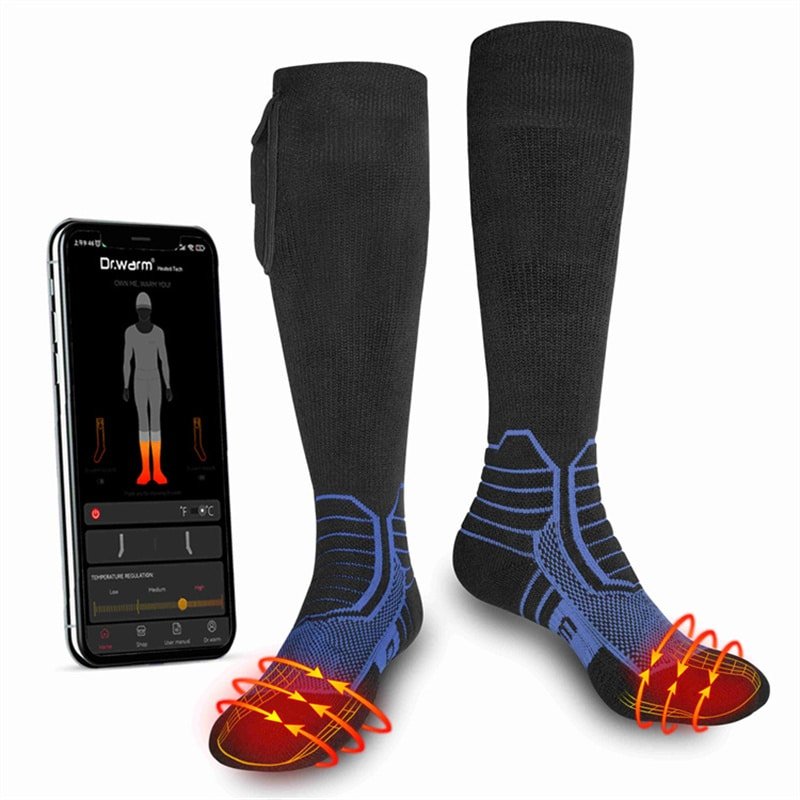
A practical heated socks buying guide for brands and distributors: heating zones, battery and runtime, fit inside a boot, waterproofing, safety, care and OEM options.